


 Cart
Cart
 Get 20% off ordering today: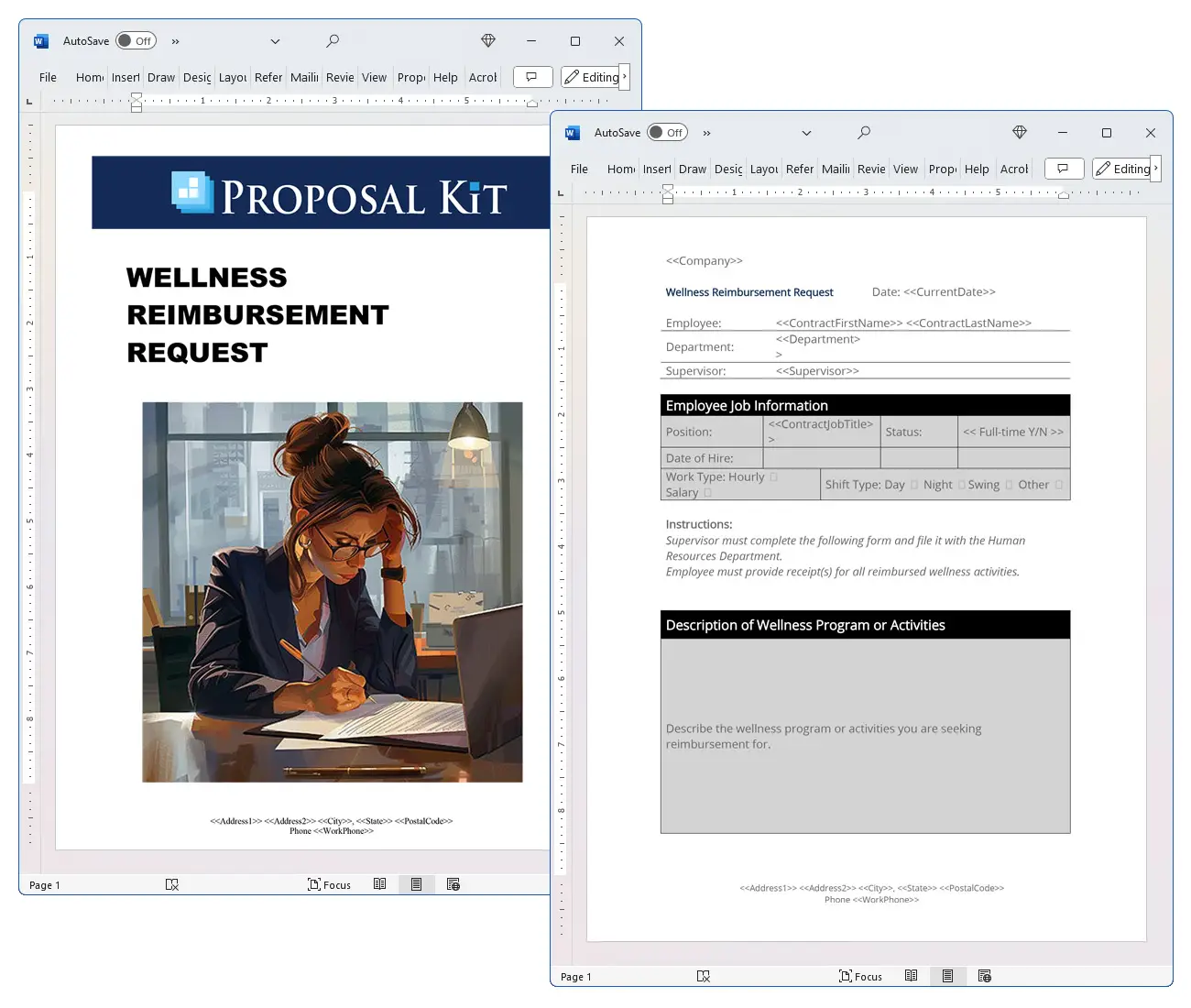

How to write your Wellness Reimbursement Request
We include this 3 page template with Human Resources Contract Pack and the Proposal Kit Professional. You will get more content and software automation for data merging, managing client documents, and creating proposals with line item quoting with a Contract Pack or the Professional.
 DOWNLOADABLE, ONE-TIME COST, NO SUBSCRIPTION FEES
 What Our Clients Say
I was extremely pleased with the multiple number of contracts for different scenarios and I also liked the advice given throughout the different manuals. You turned what would usually be a time-consuming, expensive process into an easy and affordable one that gives professional results."
Lb Web Design
1. Get Human Resources Contract Pack or the single template that includes this business contract document.
We include this contract in editable Word format that can be customized using your office software.
2. Download and install after ordering.
Once you have ordered and downloaded your template or pack, you will have all the content you need to get started.
3. Customize the contract template with your information.
You can customize the contract document as much as you need. If you get a Contract Pack or Professional Bundle, you can also use the included Wizard software to automate name/address data merging.
Use cases for this template
Nimbus Byte streamlines wellness reimbursements during a rapid hiring surge
The Challenge
As Nimbus Byte doubled headcount, HR lead Lila Chen faced inconsistent wellness claims, unclear eligible activities, missing receipts, and confusion about the three-month participation rule, monthly caps, taxable income handling, and the calendar-year submission deadline.
The Solution
They adopted the wellness reimbursement contract template and used the Proposal Kit only for supporting documents, not to write or update the contract-leveraging document assembly to produce a step-by-step employee guide, an eligibility checklist, and a supervisor sign-off memo, AI Writer to draft FAQs and a training outline, and line-item quoting to model allowance amounts by plan for individual plans and family plans.
The Implementation
Lila compiled examples of qualifying classes like licensed pilates, zumba, and indoor cycling, outlined exclusions (equipment, initiation fees, country clubs, pool-only facilities), created a receipt standard (business Tax ID, dates, covered period), and packaged submission options and timelines into a clear packet assembled with the Proposal Kit.
The Outcome
Employees submitted complete requests on time, supervisors validated participation before routing, payroll coded reimbursements correctly as taxable or non-taxable per policy, and leadership gained predictable quarter-by-quarter visibility into spend without last-minute rushes.
Granite Forge educates shift workers on what qualifies-and what doesn't
The Challenge
At Granite Forge, HR director Priya Rao saw rising denials as employees attempted reimbursement for used equipment, outdoor gear, tennis and indoor rock climbing fees, and termination fees, while others weren't sure how to document CrossFit memberships from licensed providers.
The Solution
Keeping the contract template intact, the team used Proposal Kit to create supporting materials: a "What's Covered" catalog, a licensed provider verification checklist, and a quarterly leadership report; AI Writer generated communications and scenario-based FAQs; line-item quoting projected the annual allowance by department to prevent overspend.
The Implementation
They issued a concise submission guide showing how to attach receipts, member ID, and an explanation of benefits when insurance might apply, plus a cover sheet for submission online or by mail; the Proposal Kit's document assembly bundled everything with supervisor sign-off instructions and examples that matched the three-month rule.
The Outcome
Accurate submissions increased, denials dropped, and audits were smoother because documentation arrived complete the first time, while employees felt confident choosing licensed classes without risking rejected claims.
Blue Spruce Clinics scales clarity for remote and onsite staff across locations
The Challenge
With staff spread across clinics and home offices, CFO Dana Ruiz struggled with uneven understanding of online classes eligibility, one reimbursement per year limits, and differences between family plans and individual plans, leading to missed deadlines and unpredictable costs.
The Solution
They retained the wellness reimbursement contract as the controlling document and used Proposal Kit to build supportive assets only: a reimbursement calendar, a manager coaching brief, and a receipt checklist; AI Writer produced a wellness impact summary and rollout script; line-item quoting forecasted quarterly split reimbursements against the monthly cap.
The Implementation
The team published a clear flow: complete three consecutive months, perform an eligibility check, collect receipts from a licensed business, avoid excluded items like gift card purchases, shipping and assembly fees, and social clubs, then submit by the deadline via the specified channel, with Proposal Kit assembling the packet into a single, easy-to-follow bundle.
The Outcome
Participation rose without budget surprises, submissions met timing rules, and finance recorded reimbursements correctly while employees, from virtual fitness enthusiasts to traditional gym members, navigated the process with confidence.
Abstract
This employer wellness reimbursement program provides a fitness reimbursement to encourage healthy habits among full-time employees. It covers qualified wellness program activities such as a qualified membership at a full-service facility and instructor-led classes. To be eligible, the employee must participate for three consecutive months, provide receipts, and stay within a monthly cap. Previously paid qualified expenses may be reimbursed if incurred within six months of the request and during active employment.
Eligible items typically include licensed, instructor-led classes that improve fitness or health education. Examples can include pilates classes, zumba classes, kickboxing classes, indoor cycling, online classes, and other virtual fitness offerings, provided they are delivered by a licensed business. Weight management or smoking/tobacco cessation programs (for example, WW Weight Watchers) and nutrition counseling from licensed providers can also be appropriate. Plan coverage may vary, and plan benefits vary by employer.
The plan excludes personal training fees and any personal fitness or sports equipment, including cardiovascular equipment, strength training equipment, stationary bikes, treadmills, weights, and exercise bands, whether new or used. Recreational sports programs and events are excluded (for example, road race fees, golf or ski passes, sport camps, or similar activities) unless they are included in regular health club dues. Massage, medical or psychological therapy, and fees not part of regular dues (such as certain finance charges) are not eligible.
Classes must be provided by a licensed business or instructor. Expenses cannot be double-counted with an FSA, HSA, or MRA.
To submit your request, your supervisor completes the form and files it with Human Resources. You must submit forms with a paid receipt showing the purchase, date, business Tax ID, and the period covered. Multi-month purchases are handled as a split reimbursement up to the monthly cap and paid on a quarterly basis.
HR may request additional documentation or deny expenses covered by health insurance. For questions, call HR or member services. Tax considerations can vary; consult a tax advisor. While this policy routes requests through HR, some employers use an online form, allow submission by mail, or issue a reimbursement check, direct deposit, or a prepaid Mastercard; processing time and reimbursement decisions vary by plan administrator and plan year.
Use cases: a gym membership at a fitness facility after three months of attendance; licensed virtual fitness courses; martial arts schools offering licensed classes. Proposal Kit can help teams assemble the policy and request form, automate allowance amounts with line-item quoting, and use its AI Writer and template library to produce related documents with ease.
Beyond the basics, employers should set clear expectations for timing and documentation. Many wellness programs run on a calendar year and establish a submission deadline to manage budgets and approvals. Some require you to submit by March 31 for prior-year activity, allow one reimbursement per year, or ask you to submit a request once per year to apply an annual allowance.
Others define allowance amounts by plan and confirm member eligibility during member enrollment. The plan varies by employer, but processes commonly include an eligibility check tied to a member account and member ID, with options to submit online or by mail through online reimbursement or mail-in reimbursement. Processing time can run up to eight weeks.
Covered activities should remain licensed and structured. CrossFit, pilates, zumba, kickboxing, indoor cycling, or online classes can qualify when offered by a licensed business or exercise physiologists, while recreational sports like indoor rock climbing or tennis are usually excluded unless included in regular club dues. Fees not part of normal dues are excluded, which often covers initiation fees, termination fees, and finance charges.
Country clubs, social clubs, and pool-only facilities may not qualify as a full-service facility. Equipment is not covered in this plan; many employers also exclude used equipment, outdoor gear, shipping and assembly fees, and any gift card purchase, even if bought from a licensed retail establishment or participating retailers. If a health plan may cover related services, HR can request an explanation of benefits before making reimbursement decisions. Reimbursements may be treated as taxable income; discuss details with a tax advisor.
Employee situations vary. A current member on an individual plan might complete three consecutive months at a fitness facility and then submit forms with receipts for a quarterly, split reimbursement within the monthly cap. A family plan holder might take instructor-led classes together but still submit a single claim according to plan rules.
Some plans let you choose direct deposit or a reimbursement check; others allow online reimbursement or submission by mail. Keep receipts within four months of purchase if your employer uses a tighter window, and remember that plan coverage may vary.
Proposal Kit helps organizations codify these rules across departments. Teams can assemble clear policies and request forms, automate allowance amounts with line-item quoting, and use the AI Writer and extensive template library to produce workflows, instructions, and supporting documents with ease.
Organizations can strengthen this wellness reimbursement program by defining the full request lifecycle and audit trail. Require supervisor sign-off at purchase and again after three consecutive months, then archive receipts with dates, business Tax ID, and covered period in a central repository. Align monthly caps and quarterly payouts with payroll cycles, and publish a year-end close process so employees know when prior-period requests will be cut off. Because reimbursements may be treated as taxable income, coordinate with payroll early so approved amounts appear correctly on pay statements and year-end tax forms.
Clarify plan design choices up front. Document how allowance amounts apply to family plans versus individual plans, whether multi-month purchases are prorated under the monthly cap, and how to handle requests near an employee's hire or termination date, given the rule that expenses must occur during employment. Spell out what qualifies as a licensed provider and how HR will verify business licensing when needed. Consider a simple reconsideration path for denied requests, especially when a health plan's coverage is unclear and an explanation of benefits is pending.
Communications matter. Offer a short eligibility checklist, a receipt example, and a step-by-step submission guide that explains when to submit, what to attach, and who to contact. Provide situations, such as a virtual fitness subscription, a licensed martial arts class, or a standard health club membership, so employees can self-assess eligibility before they spend.
Proposal Kit can help teams operationalize these rules by assembling clear policies and request forms, organizing allowance details with automated line-item quoting, and using the AI Writer and extensive template library to produce instructions, acknowledgments, and manager checklists that keep the process consistent and easy to follow.
How to write my Wellness Reimbursement Request document - The Narrative
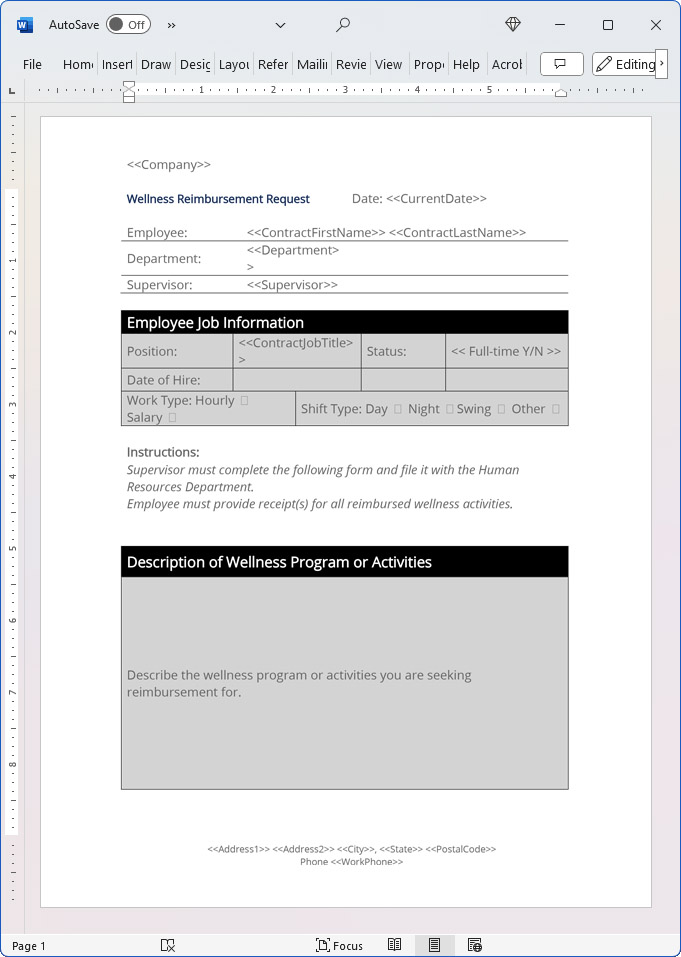
Wellness Reimbursement Request Date: Current Date. Employee: First Last Department: Department Supervisor: Supervisor. Employee Job Information Position: Contract Job Title Status: Full-time Y/N Date of Hire: Work Type: Hourly ? Salary ? Shift Type: Day ? Night ? Swing ? Other ? Supervisor must complete the following form and file it with the Human Resources Department.
Employee must provide receipt(s) for all reimbursed wellness activities. Description of Wellness Program or Activities Describe the wellness program or activities you are seeking reimbursement for. Qualifications Does employee have receipt(s) of payment for the activities being submitted for reimbursement? Yes ? No ? Are the activities submitted for reimbursement "Qualified Wellness Program" activities? Yes ? No ?
Qualified Wellness Program Activities
Purpose of Company Name Wellness Reimbursement Plan:
The purpose of this plan is to provide our full-time employees with financial incentives and assistance to encourage participation in health and wellness activities and programs, such as health club memberships, aerobic / exercise classes, health education classes, and smoking and tobacco cessation or weight management programs.
Who can participate in Wellness Reimbursement:
Full-time, regular employees are eligible to participate in the wellness reimbursement program. The maximum benefit an employee can receive is limited to Insert $ Amount/month for all qualified activities. For an activity to be considered "qualified," the employee must participate in the activity for three consecutive months to be eligible for reimbursement. The company will also reimburse any previously paid qualified wellness expense so long as it is within six months of the reimbursement request, subject to documentation requirements.
The following activities shall be excluded from the Wellness Reimbursement plan:
Recreational sports programs (unless included in health club membership dues). Recreational sports events (including marathons, triathlons, tournaments). Personal trainer fees and personal fitness or sports equipment.
Classes, training, or instruction that is not provided by a licensed business or instructor (proof may be required). Meals, supplements, or aids for weight loss, body building, or for smoking / tobacco cessation. Massage programs. Medical treatment programs or therapy.
Psychological treatment programs or therapy. Fees, finance charges, late fees or other charges not a part of regular health club or classroom dues.
Payment Requirements:
All reimbursement requests must have a paid receipt showing the wellness activity purchased, date of purchase, the business Tax ID, and the period of time that the purchase covers. For multi-month purchases made up front, company shall reimburse up to Insert $ Amount/month, paid on a quarterly basis. Company will reimburse only wellness expenses incurred during employment with Company Name. Expenses prior to employment with Company Name shall not be considered.
Company reserves the right to request additional information or documentation on all requested reimbursements. Company may also deny a reimbursement expense if that expense is determined to be covered under an applicable health insurance plan or other reimbursable program. Employees may not submit a wellness reimbursement request for any expense that has already been submitted or paid out through a Flexible Spending Account (FSA), Health Savings Account (HSA), or Medical Reimbursement Account (MRA). If you have any questions concerning the eligibility of any wellness expense, please consult the Human Resources Department.
20% Off Discount
 Add To Cart This Word Template Only
 Add To Cart Human Resources Contract Pack
 Add To Cart Proposal Kit Professional Bundle
 4.7 stars, based on 850 reviews
Related Documents
How to Build a Legal Contract with Proposal Kit
This video illustrates how to create a legal contract using the Proposal Pack Wizard software. It also shows how to create a proposal with an invoice and contract at the same time.
Frequently Asked Questions
How do I customize this contract to fit my business needs?
Customizing this contract involves editing the document to include your business details, terms, and conditions. The templates are designed to be flexible, allowing you to insert your company's name, address, and other relevant information. You can modify clauses to reflect your unique business practices and legal requirements.
Is this contract compliant with laws and regulations?
The legal contract templates are written by legal professionals and designed to comply with current laws and regulations at the time of their writing. However, laws can vary by jurisdiction and change over time, so it's recommended to have your contract reviewed by a local attorney to ensure it meets all legal requirements specific to your region and industry. Templates are licensed as self-help information and not as legal advice.
Can I use the same contract for different clients or projects?
You can use the same contract for different clients or projects. The templates are versatile and easily adapted for various scenarios. You will need to update specific details such as client names, project descriptions, and any unique terms for each new agreement to ensure that each contract accurately reflects the particulars of the individual client or project.
What should I do if I encounter a clause or term I don't understand?
If you encounter a clause or term in the contract that you need help understanding, you can refer to guidance notes explaining each section's purpose and use. For more complex or unclear terms, it's advisable to consult with a legal professional who can explain the clause and help you determine if any modifications are necessary to suit your specific needs.
How do I ensure that the contract is legally binding and enforceable?
To ensure that the contract is legally binding and enforceable, follow these steps:
- Complete all relevant sections: Make sure all blanks are filled in with accurate information.
- Include all necessary terms and conditions: Ensure that all essential elements, such as payment terms, deliverables, timelines, and responsibilities, are clearly defined.
- Signatures: Both parties must sign the contract, and it is often recommended that the contract be witnessed or notarized, depending on the legal requirements in your jurisdiction.
- Consult a legal professional: Before finalizing the contract, have it reviewed by an attorney to ensure it complies with applicable laws and protects your interests.
 Published by Proposal Kit, Inc.
Disclaimers
Proposal Kit, Inc. makes no warranty and accepts no responsibility for the suitability of any materials to the licensee's business. Proposal Kit, Inc. assumes no responsibility or liability for errors or inaccuracies. Licensee accepts all responsibility for the results obtained. The information included is not legal advice. Names in use cases have been fictionalized. Your use of the contract template and any purchased packages constitutes acceptance and understanding of these disclaimers and terms and conditions.
 Facebook
 YouTube
 Bluesky
 Search Site