

 Cart
Cart
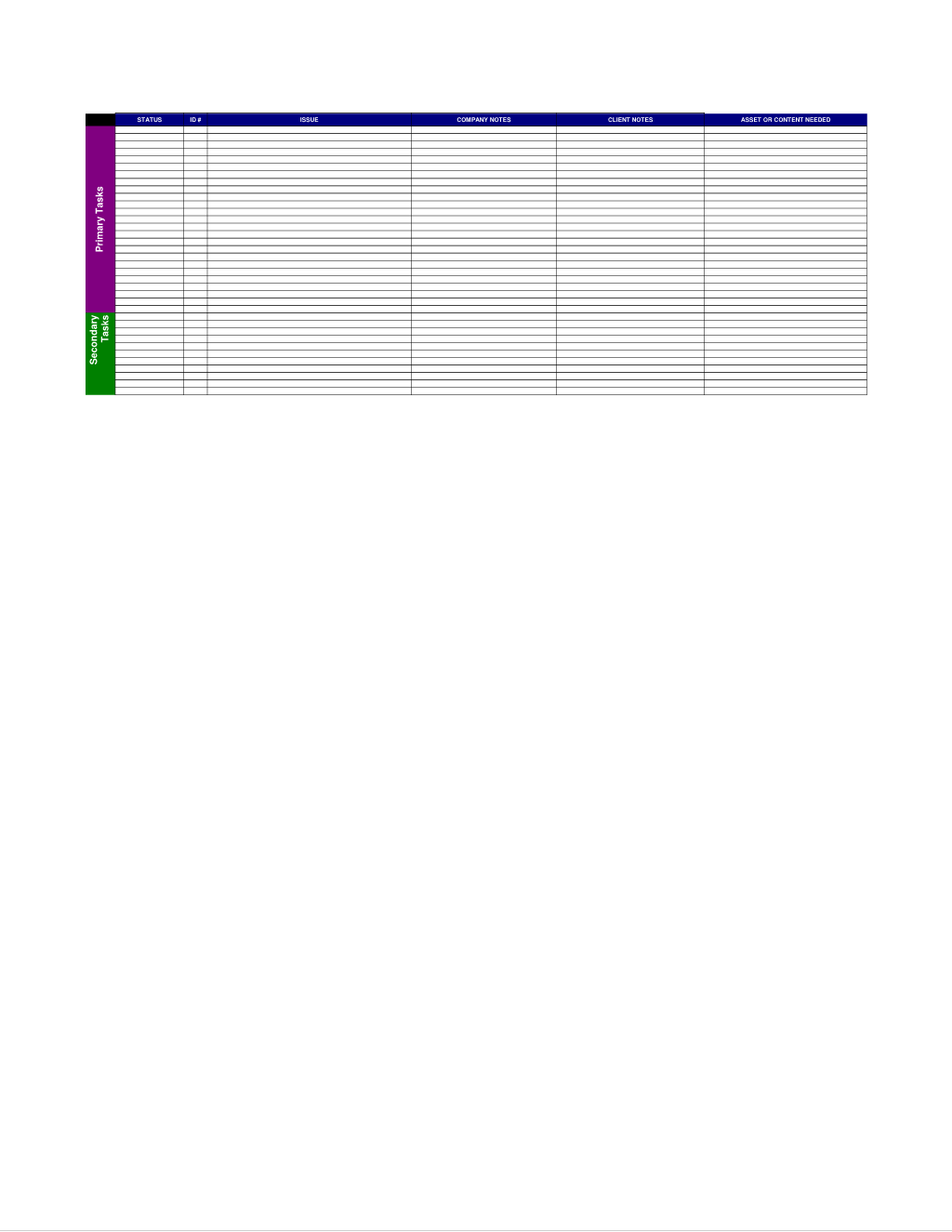
Project Issue Log Spreadsheet
 Get 20% off ordering today: Click here for the code
Proposal Kit Professional adds business proposals, all six Contract Packs,
Project Management Pack library, and Expert Edition software.
We include this editable document in the Proposal Kit Professional. Order and download it for $199. Follow these steps to get started.
 DOWNLOADABLE, ONE-TIME COST, NO SUBSCRIPTION FEES
Key Takeaways
- One-time License, No Subscriptions: Pay once and use Proposal Kit forever-no monthly fees or per-use charges.
- Built for Business Projects: Start with a proven Project Issue Log Spreadsheet and tailor sections, fields, and branding for your day-to-day project work.
- Instant Access: Download immediately and open the document right away-no waiting, no onboarding delay.
- Project-Ready Structure: Use a ready, professional layout for real-world project tasks (checklists, forms, analysis pages) so teams can execute consistently.
- Fully Editable in Word: Edit everything in Microsoft Word-swap text, add/remove sections, and apply your logo/colors without special skills.
- Step-by-Step Wizard Help: The Proposal Pack Wizard guides you with training/help and keeps you moving-no getting stuck on formatting or assembly steps.
- Wizard Data Merge & Project Management: Let the Wizard manage projects and merge recurring data (company/client names, addresses, dates) across your project documents.
- Included in Proposal Kit Professional: Available exclusively in the Proposal Kit Professional bundle.
 What Our Clients Say
I have been using Proposal Kit since 2002 and it is the best product you can find anywhere for anyone who has a business and want to be able to utilize contracts without the headache and hassle of thinking in back of your mind did I cover this or that in the contract process. This resource saves you time, money and frustration and allows you to focus on what you like to do best and that is making money and enjoy what you do most for your clients. This purchase is one that you can be proud of and look back and say it is money well spent that has a true ROI many times over."
1. Get Proposal Kit Professional that includes this business document.
We include this Project Issue Log Spreadsheet in an editable format that you can customize for your needs.
2. Download and install after ordering.
Once you have ordered and downloaded your Proposal Kit Professional, you will have all the content you need to get started with your project management.
3. Customize the project template with your information.
You can customize the project document as much as you need. You can also use the included Wizard software to automate name/address data merging.
Use cases for this document
BlueFerry Labs tames a launch-day bug surge with disciplined tracking and clear narratives
The Challenge
On release week, BlueFerry Labs' new app flooded support queues with open issues, from critical crashes to confusing onboarding, leaving developers, QA, and vendors arguing priorities while executives demanded status updates before sprint reviews.
The Solution
Product manager Nora Park standardized an excel issue tracking template with issue id, logged date, issue owner, issue status, priority low medium high critical, and reported and resolved dates, then used Proposal Kit separately to create supporting documents: AI Writer produced weekly status reports and a postmortem study, RFP Analyzer summarized client SLA obligations, and line-item quoting priced a change-order proposal for added support coverage.
The Implementation
The team assigned to team members by component, documented reproduction steps and expected results, ran daily triage, and published a simple dashboard template for leadership; in parallel, Nora used Proposal Kit's document assembly to generate documents that mirrored tracker fields and timelines without altering the tracker itself.
The Outcome
Resolution time dropped by 42%, high-severity items closed first, leadership received crisp narratives tied to the data, and the client accepted the change order based on transparent scope, quotes, and commitments.
Sunrise Health Network restores billing stability across multiple vendors
The Challenge
A billing product service technical outage rippled across Sunrise Health Network's clinics, creating conflicting tickets with different vendors and no shared view of ownership, timing, or compliance reporting for the board.
The Solution
Operations lead Marcus Hale deployed a project issue tracking template to tag department, supervisor, issue actions, and escalation needed, while using Proposal Kit to produce companion documents: AI Writer drafted an incident report and service recovery plan, RFP Analyzer compared payer contract requirements to the outage timeline, and line-item quoting estimated remediation and overtime costs for approval.
The Implementation
The team logged each case with issue status (status open, work in progress, closed issue), captured impact and final resolution and rationale, and shared tracker excerpts with partners and clients; Proposal Kit generated the formal reports and a board-ready summary without touching the underlying tracker.
The Outcome
Claims resumed within 48 hours, audit gaps closed with evidence-rich reports, vendors aligned on responsibilities, and finance approved targeted spending based on clear line-item estimates.
IronBridge Manufacturing reduces defects and wins a new supply contract
The Challenge
Rising defects and late shipments threatened IronBridge's largest customer, with scattered notes across spreadsheets and no single source for severity level, root cause, or ownership.
The Solution
Quality director Elena Ruiz consolidated work in an excel or google sheets tracker capturing issue description, severity level, issue owner, assignees, open and close dates, and completion date, then used Proposal Kit to create support documents: AI Writer drafted a quality improvement plan and vendor scorecards, RFP Analyzer structured a sourcing RFP, and line-item quoting assembled precise pricing for tooling changes.
The Implementation
Teams ran weekly sprint reviews against a project timeline Gantt chart, tracked impact and actions, and published concise status updates; Proposal Kit's document assembly turned tracker insights into proposals and reports that were shared with partners and clients.
The Outcome
Defects fell 35%, on-time delivery rebounded, and IronBridge secured a two-year renewal after presenting a compelling improvement plan backed by clear quotes and data-driven narratives.
Abstract
This concise document divides work into Primary Tasks and Secondary Tasks, giving teams a simple structure to organize project management issue tracking. When expanded into an issue tracking template, the same hierarchy supports a clear flow from triage to closure. Teams can capture an issue ID and issue numbers, issue description, issue priority with low, medium, high, and critical levels, date identified, estimated resolution date, completion date, and final resolution and rationale. Include fields for escalation needed, status open, work in progress, or closed issue, along with owner, assignees, logged by, department handling the issue, supervisor, components, impact, actions, and a notes column.
Implement this framework as an Excel template or Google Sheets file for easy shareability. An Excel download in Excel XLSX or Excel XLS, an open document spreadsheet in ODS, or a PDF download all work as a shareable document for partners and clients. Many teams use an Excel spreadsheet to assign issues, track progress, and tag and filter their backlog work done. Add open and close dates to measure resolution time and support stakeholder updates, ticket review, unresolved ticket review, and service audits.
For software and IT, this structure becomes a bug report tracker or software issue tracker. Capture severity level, reproduction steps, expected results, and the issue environment to help developers and quality assurance teams. It also fits the issue tracking, customer issue tracking, and project defect tracker needs across billing, product, service, and technical categories. Use simple categorization and priority levels to support team meetings and sprints, daily standup report reviews, and support team check-ins.
If you visualize results, your issue tracker dashboard can summarize status and priority percentages with pie charts, a timeline, or a Gantt view. While cloud-based tools with live dashboards, real-time collaboration, kanban board options, five different views, or projectmanager software and monday.com can consume an Excel or Google Sheets export, the underlying tracker remains the same. It complements a risk vs issue approach alongside a risk register template, PRINCE2 templates, MS Project schedules, WBS examples, a task list, a calendar, a product requirements document, and a software test case template.
The Proposal Kit can help assemble these project templates to download into cohesive documents. Its document assembly, automated line-item quoting, AI Writer for building supporting documents, and extensive template library make it easy to generate consistent, business-ready materials with minimal effort.
Beyond listing Primary and Secondary Tasks, teams benefit from connecting the tracker to daily operations. Support teams need clear status updates and status reports tied to sprint reviews so open issues do not linger. A project issue tracking template or Excel issue tracking template makes it easy to assign to team members, set priority low, medium, high, or critical, record issue status, issue owner, issue actions, and a logged date, then compare reported and resolved dates. Organizations often share with partners, clients, and vendors for transparency across billing, product, service, and technical categories.
Issue tracking templates and bug report templates can be implemented as an Excel or an open ProjectManager file, then visualized with a dashboard template or a live dashboard for leadership reviews. Many groups add a project timeline Gantt chart that aligns with team roles and responsibilities, helping managers balance workload and escalate where needed. When used alongside document generation in general business systems, templates with dynamic placeholders support automated workflow steps that let teams upload and configure standard forms, then generate documents for status updates. Some organizations connect forms APIs and integrations to streamline intake and keep open issues synchronized across tools.
These practices work for IT, software, and customer operations, and also for cross-functional projects with vendors and internal departments. The result is faster triage, consistent messaging, and better audit trails without overcomplicating the process.
Proposal Kit helps teams package this information into clear, client-ready materials. Its document assembly, automated line-item quoting, AI Writer for supporting documents, and extensive template library make it straightforward to produce proposals, status reports, and role definitions that mirror your tracker fields and timelines, improving consistency and ease of use.
A two-tier list of Primary and Secondary Tasks can anchor a disciplined project issue tracking approach. Treat Primary Tasks as items with higher business impact or blocking dependencies, while Secondary Tasks capture follow-on work, observations, or minor defects. Use clear categorization so each entry flows through a consistent lifecycle: capture the issue ID on intake, record a concise issue description, set priority levels and severity levels, and identify the department and supervisor accountable for the next step. Define components to route work to the right assignees, and set expected results to confirm acceptance criteria.
To improve decision-making, maintain structured metadata beyond the basics. Add issue environment to distinguish test versus production, reproduction steps for repeatability, and impact to frame risk vs issue discussions. Track logged date, open and close dates, and reported and resolved dates to measure resolution time.
Capture issue status and status updates using a simple vocabulary, such as status open, work in progress, or closed issue, and record issue actions and final resolution and rationale. This creates reliable status reports for sprint reviews, stakeholder updates, and ticket review meetings with support teams and vendors across billing product service technical categories.
Many organizations operationalize this with an Excel issue tracking template as an Excel spreadsheet for fast adoption. Offer an Excel download in Excel XLSX or Excel XLS, an open document spreadsheet in ODS, or a PDF download to share with partners and clients. Teams can manage open issues in Google Sheets for real-time collaboration, then export a PDF snapshot for leadership.
A dashboard template or issue tracker dashboard can summarize status and priority using pie charts, a timeline, or a Gantt chart, and a project timeline Gantt chart aligned to a task list and calendar. Cloud-based tools can ingest Excel or open in ProjectManager files to present a live dashboard, tag and filter the backlog, and assign to team members via a kanban board or five different views.
Use cases include a customer support bug report tracker, an IT change queue that feeds software test case template execution by developers and quality assurance, or a cross-functional launch plan that coordinates vendors. Teams can also align this with a risk register template, PRINCE2 templates, MS Project schedules, WBS examples, a product requirements document, and forms APIs integrations to upload and configure data, enable document generation with dynamic placeholders, automate an approval step in an automated workflow, and generate documents for audit.
Proposal Kit helps teams package these practices into consistent deliverables. Its document assembly, automated line-item quoting, AI Writer for supporting documents, and extensive template library streamline creation of proposals, status reports, and role definitions that mirror your tracker fields, improving clarity and ease of use.
How to write my Project Issue Log Spreadsheet document
business,project,records,management,toolkit,information,documents,templates,boilerplate,form,outline,text bugs,problemsThe editable Project Issue Log Spreadsheet document - complete with the actual formatting and layout is available in the retail Proposal Kit Professional.
20% Off Discount
 4.7 stars, based on 850 reviews
Related Documents
 Published by Proposal Kit, Inc.
We include a library of documents you can use based on your needs. All projects are different and have different needs and goals. Pick the documents from our collection, such as the Project Issue Log Spreadsheet, and use them as needed for your project.
 Facebook
 YouTube
 Bluesky
 Search Site
© 1997 - 2026, Proposal Kit, Inc. All rights reserved. Privacy Policy