

 Cart
Cart
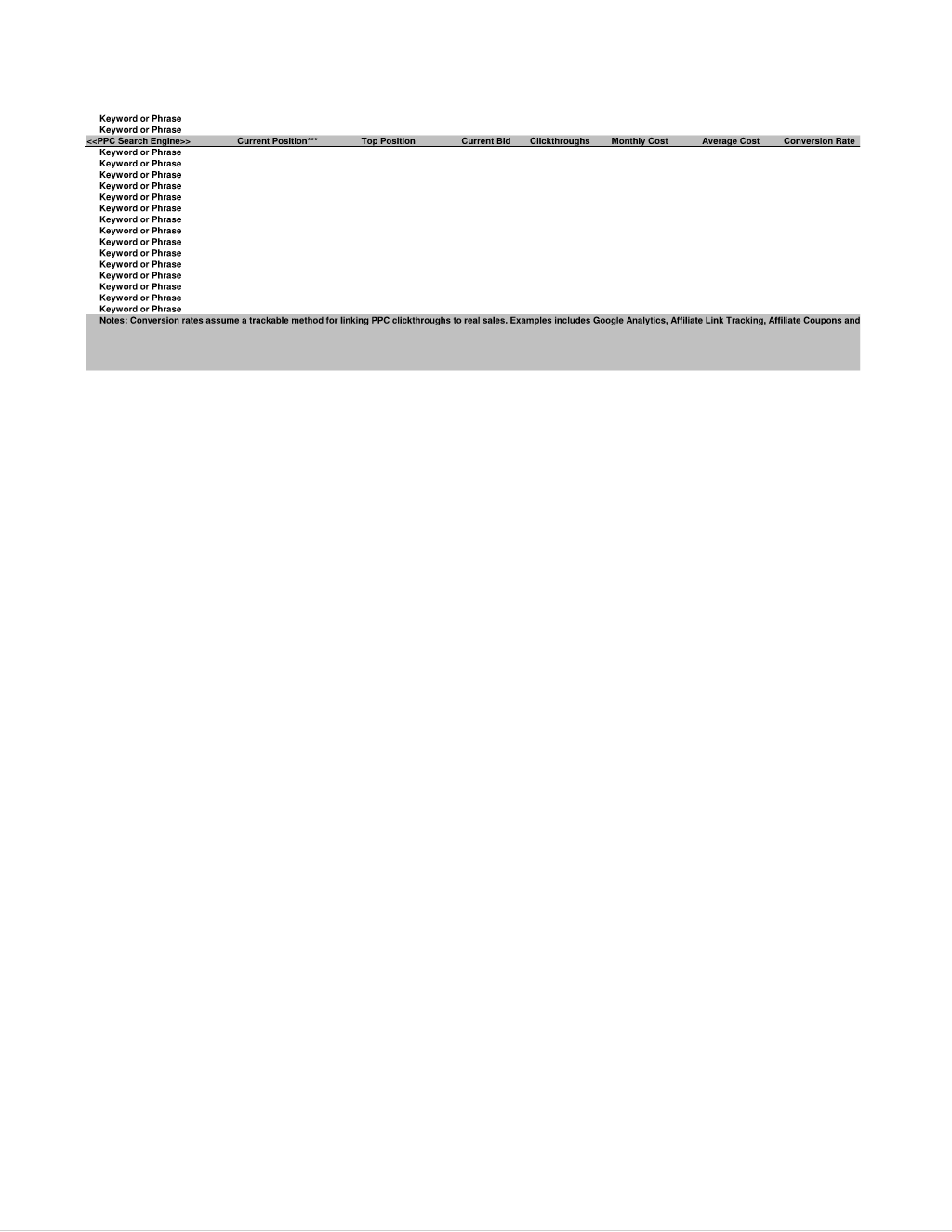
SEO Pay Per Click Keyword Report
 Get 20% off ordering today: Click here for the code
Proposal Kit Professional adds business proposals, all six Contract Packs,
Project Management Pack library, and Expert Edition software.
We include this editable document in the Proposal Kit Professional. Order and download it for $199. Follow these steps to get started.
 DOWNLOADABLE, ONE-TIME COST, NO SUBSCRIPTION FEES
Key Takeaways
- One-time License, No Subscriptions: Pay once and use Proposal Kit forever-no monthly fees or per-use charges.
- Built for Business Projects: Start with a proven SEO Pay Per Click Keyword Report and tailor sections, fields, and branding for your day-to-day project work.
- Instant Access: Download immediately and open the document right away-no waiting, no onboarding delay.
- Project-Ready Structure: Use a ready, professional layout for real-world project tasks (checklists, forms, analysis pages) so teams can execute consistently.
- Fully Editable in Word: Edit everything in Microsoft Word-swap text, add/remove sections, and apply your logo/colors without special skills.
- Step-by-Step Wizard Help: The Proposal Pack Wizard guides you with training/help and keeps you moving-no getting stuck on formatting or assembly steps.
- Wizard Data Merge & Project Management: Let the Wizard manage projects and merge recurring data (company/client names, addresses, dates) across your project documents.
- Included in Proposal Kit Professional: Available exclusively in the Proposal Kit Professional bundle.
 What Our Clients Say
I have used this package now for the past 6 or 7 years and it has been a wonderful companion to my work as a consultant. The package is a ready answer to the needs of professionals like me. It reduces the time and effort that it might have taken you to start sourcing for appropriate wordings and phrases, and it gives your proposal that internationally accepted professional touch. Kudos to the guys behind this, Thumbs Up!"
Marketing Communications & Project Management & Administration Consultants
1. Get Proposal Kit Professional that includes this business document.
We include this SEO Pay Per Click Keyword Report in an editable format that you can customize for your needs.
2. Download and install after ordering.
Once you have ordered and downloaded your Proposal Kit Professional, you will have all the content you need to get started with your project management.
3. Customize the project template with your information.
You can customize the project document as much as you need. You can also use the included Wizard software to automate name/address data merging.
Use cases for this document
Ava Chen at Lumen Luggage turns a leaky PPC budget into a measurable growth engine
The Challenge
Ava, the new marketing lead at Lumen Luggage, inherited Google Ads and Bing Ads accounts with ballooning cost per click, muddled branded vs non-branded terms, and no reliable way to link paid keywords to sales, so the team distrusted the reports and kept slashing spend after every underperforming month.
The Solution
She rebuilt the account around keyword intent, long-tail keywords, and a disciplined negative keywords list, then set up clean attribution using Google Analytics and a search terms report workflow while using Proposal Kit's software to create supporting documents: an executive proposal drafted with AI Writer, a vendor comparison using RFP Analyzer, and a line-item quoted test plan that aligned budgets to keyword groups.
The Implementation
Weekly, Ava reviewed search queries against the keyword report, refined ad groups, tuned ad copy and landing page relevance, and packaged updates using Proposal Kit document creation to produce a PPC overview, a campaign optimization brief, and a stakeholder Q&A; the RFP Analyzer ranked analytics consultants, and the line-item quoting clarified phased investments by campaign and geography.
The Outcome
Within a quarter, the team trusted the data, CTR and conversion rate rose, ROAS stabilized, and leadership approved ongoing tests because the Proposal Kit-built proposals and reports made results clear and tied each budget line to expected outcomes.
Miguel Ortega at QuarrySoft wins enterprise leads with disciplined search marketing ops
The Challenge
QuarrySoft sells workflow software to industrial firms, but Miguel's paid search efforts blended competitor keywords with generic queries, lacked keyword tracking for long sales cycles, and produced inconsistent insights across regions, leaving sales unsure which campaigns generated quality domain leads.
The Solution
He segmented campaigns by country and industry, separated branded keywords from non-branded discovery, and used keyword analysis to prioritize terms with healthy search volume and acceptable CPC while employing Proposal Kit to create the supporting collateral: a research study drafted with AI Writer, an RFP response deconstructed via RFP Analyzer to meet a prospect's requirements, and a line-item quoted pilot that mapped costs to milestones.
The Implementation
Miguel instituted a cadence of ppc reporting with CSV downloads, added an ad rank tracker and keyword checking for governance, and used Proposal Kit document assembly to produce a website keyword analysis memo and a board-ready plan that documented the account structure, testing roadmap, and roles.
The Outcome
Sales received higher-intent inquiries from targeted industries, paid search performance became predictable across regions, and stakeholders credited the clear Proposal Kit-produced reports and quotes for keeping budgets aligned with measurable pipeline goals.
Nina Patel guides Prairie Dental's franchise network to local-market wins
The Challenge
Prairie Dental's 18 locations ran siloed search campaigns that duplicated paid keywords, drove up CPC, and ignored search terms vs keyword report discrepancies, so franchisees questioned whether search engine marketing was worth the spend.
The Solution
Nina centralized management, created keyword groups of 10-15 per service line, implemented negative match to cut waste, and standardized landing pages for local relevance; to support rollout, she used Proposal Kit to produce supplemental documents: a franchise playbook with AI Writer, a vendor scorecard via RFP Analyzer for regional agencies, and line-item quoting for location-level budgets.
The Implementation
She ran monthly campaign analysis, aligned ad copy to keyword intent, shared a Proposal Kit-created PPC overview and training guide, and instituted a search terms report cleanup cadence that fed back into account structure updates and remarketing lists.
The Outcome
Franchisees saw higher impression share on core services, better click-through rates, consistent conversion tracking, and renewed confidence fostered by Proposal Kit's clear, repeatable documentation that linked each budgeted test to concrete performance goals.
Abstract
This document defines a practical framework for summarizing PPC and SEO keyword performance and, most importantly, for linking paid search clicks to real sales. It emphasizes that conversion rates require reliable attribution methods such as Google Analytics, affiliate link tracking, coupon codes, referral IDs, or brief employee/sales polling. With sound attribution in place, businesses can evaluate search campaigns across Google Ads and Microsoft Ads (Bing Ads), compare organic search and paid search, and make data-driven decisions.
A professional keyword report typically starts with keyword research using a keyword tool such as Google Keyword Planner or a keyword generator and popularity tool. Teams build a keyword list with keyword ideas, related keywords, long-tail keywords, and exclude waste via negative keywords and negative match recommendations. Organize terms into keyword groups of 10 to 15 and align ad groups and campaigns to keyword intent and landing page relevance.
Include competition level, search volume, estimated cpc, cpc data, and projected clicks and impressions. Track click-through rate (ctr), conversions, conversion rate, return on ad spend (ROAS), ad spend, quality score, and impression share. Use search terms reports to clean up keyword lists, spot discrepancy impressions, and expand with keyword list download and CSV file exports for weekly or monthly reports.
Campaign analysis benefits from competitor research, serp analysis, competitor keywords, keyword difficulty, and keyword ranking history for context. Consider branded vs non-branded segmentation, remarketing strategy, and local campaign targeting with location data and industries and locations filters. Pull insights from analytics tools and data sources such as Search Console, Google Analytics, and, when relevant, Facebook Ads.
Review ad copy, ad test history, ad performance, and landing page results to optimize campaigns and account structure. Compare search queries to the keyword report to identify underperforming campaign topics and to refine keyword clustering, keyword grouping, and the negative keywords list. Use Google Trends and industry filter inputs to prioritize popular keywords, popular and niche keywords, and the highest cpc opportunities that fit your marketing budget and return on investment goals.
Use cases include an e-commerce retailer improving paid search performance with search ads, a B2B firm running ppc campaigns on Google and Bing, and a local service provider optimizing a ppc budget by tightening negative match and boosting quality score keywords.
Proposal Kit helps teams assemble a clear reporting template and present PPC data consistently. Its document assembly, automated line-item quoting, AI Writer for supporting documents, and extensive template library make it easier to package findings and recommendations for search marketing campaigns.
Beyond attribution, the document's guidance supports smarter search engine marketing for paid search marketers who must balance cost per click with keyword volume, keyword popularity, and competition data. Start with keyword suggestions from a keyword finder, related keyword generator, or a Google keyword tool alternative, then run keyword analysis and keyword checking to confirm intent. Segment branded keywords and non-branded keywords, compare paid keywords with organic trends, and use a search terms report to identify gaps and enforce negative keywords to save money policies.
Evaluate cpc and search volume side by side with competition and cost data, and perform keyword comparison across countries and industry segments; filter by industry as needed. Use an ad rank tracker, keyword tracking, and ppc reporting to track performance and keyword rankings, and schedule ppc overview summaries using CSV download outputs that report ppc data for weekly campaign optimization and ppc data analysis.
Competitive context matters. Combine ppc competitor research and seo competitor research with website keyword analysis, URL analysis of your website URL, and a quick review of a competitor's homepage. A keyword spy tool and serp analysis of the search engine results page and search engine results pages reveal competitor seo tactics, the most searched keywords, and where quality backlinks and backlinks drive search engine traffic.
Use keyword popularity tool readings, keyword phrases expansion, and keyword list expansion ideas informed by search queries from Google Search and Google Adwords. For teams with mature analytics, automatically pull data from ppc data sources via a Google API, then track rankings and ranking shifts across paid advertising and search advertising. Calibrate ppc ad test plans and ad copy based on search terms vs keyword report discrepancies, and refine domain leads targeting for your target audience. Stay current with guidance from Search Engine Journal, Search Engine Land, and your Google Partner or Google Premier Partner agency when choosing tools with strong reputations, such as those recognized by G2 Crowd awards. AI-powered writing with ChatGPT can help summarize findings and produce keyword advice for your campaign.
Proposal Kit helps teams present results clearly. Use its document assembly to standardize reporting templates, its AI Writer to write narratives and recommendations, and its extensive template library to package attachments like CSV downloads and data visualization reports, making it easier to communicate insights and next steps to stakeholders.
Expanding on the strategy, treat your portfolio of paid digital advertising as an integrated program rather than isolated search campaigns. Balance budget and pacing across channels using a shared KPI framework that rolls up conversions, ROAS, and impression share. Align calendars for promotions and seasonality, set frequency caps where available, and maintain brand safety and compliance guidelines. Establish quarterly planning checkpoints to reassess target audience shifts, keyword intent trends, and landing page alignment so you can reallocate spend quickly when an underperforming segment emerges.
Use ppc competitor spying as structured competitive intelligence, not guesswork. Monitor how rivals position offers, rotate ad copy, and time promotions, then differentiate with clearer value props and stronger calls to action. Track when competitors expand into your branded keywords, watch their move into new geographies, and benchmark their ad extensions and landing page speed. Feed these insights into ad test backlogs and prioritize tests that defend high-value terms or exploit gaps in non-branded categories.
While major search engines do not use meta keywords for rankings, you can still use them internally as a controlled taxonomy to label landing pages, map keyword groups to content, and speed QA. A consistent tagging scheme helps analysts reconcile search terms report findings with creative assets, reduces handoffs, and improves audit readiness when comparing planned keyword phrases to active ads and pages.
Proposal Kit can support these practices by standardizing the documentation around planning cycles, competitor briefs, and testing roadmaps. Teams can assemble consistent report packages, include structured appendices for campaign rules and test plans, and streamline updates so stakeholders see clear next steps alongside the data.
How do you write a SEO Pay Per Click Keyword Report document?
business,project,records,management,toolkit,information,documents,templates,boilerplate,form,outline,text search,engine,optimization,ppcThe editable SEO Pay Per Click Keyword Report document - complete with the actual formatting and layout is available in the retail Proposal Kit Professional.
20% Off Discount
 4.7 stars, based on 850 reviews
Related Documents
 Published by Proposal Kit, Inc.
We include a library of documents you can use based on your needs. All projects are different and have different needs and goals. Pick the documents from our collection, such as the SEO Pay Per Click Keyword Report, and use them as needed for your project.
 Facebook
 YouTube
 Bluesky
 Search Site
© 1997 - 2026, Proposal Kit, Inc. All rights reserved. Privacy Policy