

 Cart
Cart
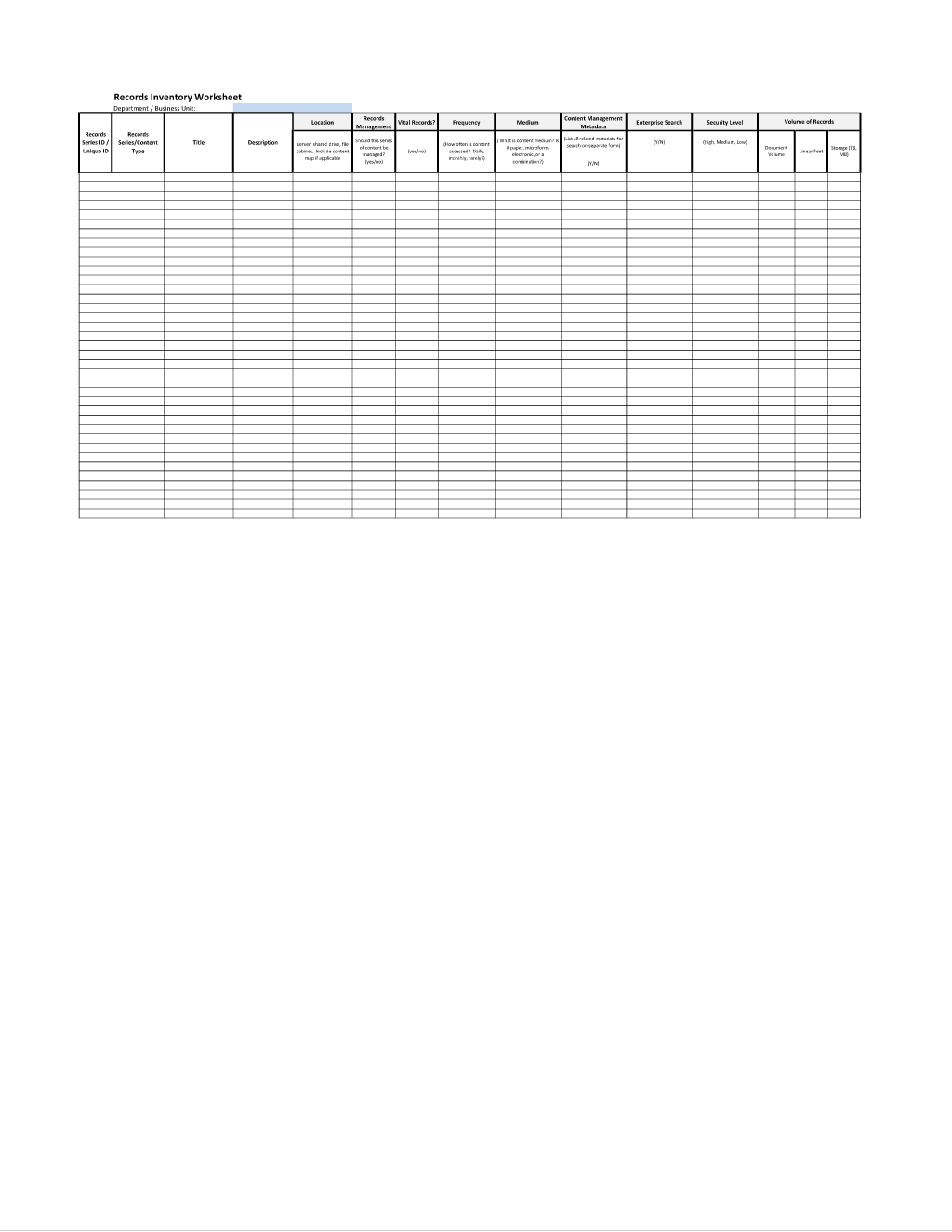
Records Inventory Worksheet
 Get 20% off ordering today: Click here for the code
Proposal Kit Professional adds business proposals, all six Contract Packs,
Project Management Pack library, and Expert Edition software.
We include this editable document in the Proposal Kit Professional. Order and download it for $199. Follow these steps to get started.
 DOWNLOADABLE, ONE-TIME COST, NO SUBSCRIPTION FEES
Key Takeaways
- One-time License, No Subscriptions: Pay once and use Proposal Kit forever-no monthly fees or per-use charges.
- Built for Business Projects: Start with a proven Records Inventory Worksheet and tailor sections, fields, and branding for your day-to-day project work.
- Instant Access: Download immediately and open the document right away-no waiting, no onboarding delay.
- Project-Ready Structure: Use a ready, professional layout for real-world project tasks (checklists, forms, analysis pages) so teams can execute consistently.
- Fully Editable in Word: Edit everything in Microsoft Word-swap text, add/remove sections, and apply your logo/colors without special skills.
- Step-by-Step Wizard Help: The Proposal Pack Wizard guides you with training/help and keeps you moving-no getting stuck on formatting or assembly steps.
- Wizard Data Merge & Project Management: Let the Wizard manage projects and merge recurring data (company/client names, addresses, dates) across your project documents.
- Included in Proposal Kit Professional: Available exclusively in the Proposal Kit Professional bundle.
 What Our Clients Say
Proposal Kit has been excellent resource for a startup business. It offers a complete suite of office templates and contracts specific to my business. These are professional documents that create incredible value, you could not find a better source at so little cost. I highly recommend this software as way to grow your business. Every business should own this software, the support has been excellent!"
1. Get Proposal Kit Professional that includes this business document.
We include this Records Inventory Worksheet in an editable format that you can customize for your needs.
2. Download and install after ordering.
Once you have ordered and downloaded your Proposal Kit Professional, you will have all the content you need to get started with your project management.
3. Customize the project template with your information.
You can customize the project document as much as you need. You can also use the included Wizard software to automate name/address data merging.
Use cases for this document
Pinecrest Health Network organizes records to pass a compliance audit
The Challenge
With a HIPAA audit approaching, Pinecrest Health Network discovered scattered paper consents and electronic records across shared drives and a file room, unclear retention periods, and no single catalog of record series or volume in cubic feet for storage planning.
The Solution
They adopted a records inventory worksheet and simple form to capture series titles, years covered, media types, reference status, and security levels, while using Proposal Kit separately to create a records management policy, training plan, and a budget proposal with line-item quoting for boxes, palletizing, and offsite storage.
The Implementation
The team ran inventory steps by department, mapped locations, measured linear feet, logged file size bytes for electronic stores, and did not use AI to fill the template; Proposal Kit's AI Writer produced the policy, quick-start guides, and an executive report, and its RFP Analyzer helped compare vendor responses for imaging and state records center services.
The Outcome
Pinecrest passed the audit, reduced storage costs by consolidating cartons, accelerated retrieval times, and gained leadership approval for a phased modernization using Proposal Kit-generated proposals and reports that supported, but did not replace, the project management documents.
Riverbend Public Works clears backlog and transfers archives
The Challenge
Riverbend Public Works faced an accumulation of inactive government records without documented disposition authority and needed to separate records proposed for permanent retention from temporary records slated for legal destruction under its records retention schedule.
The Solution
They used the records inventory worksheet to identify vital records, inclusive dates, and disposition categories, and leveraged the Proposal Kit to assemble a memorandum of transfer package to the state archives, a staff training deck, and a cost proposal using line-item quoting for transport, indexing, and reboxing.
The Implementation
Crews labeled shelves with a map of the office, recorded volume in cubic feet, prepared container lists, and requested approvals; Proposal Kit's AI Writer drafted a retention guidance summary and FAQs, while the RFP Analyzer structured a competitive evaluation for scanning vendors without altering the inventory template itself.
The Outcome
Riverbend shipped archival records to the records center, destroyed non-archival records with proper approvals, and achieved schedule compliance, supported by clear, Proposal Kit-created training and transfer documents that complemented their project management files.
Nimbus Logistics builds investor-ready information governance
The Challenge
Fast-growing Nimbus Logistics struggled with sprawling shared drives, mixed media, and missing metadata, and a prospective investor required a documented records plan, inventory, and retention compliance before funding.
The Solution
Nimbus implemented the records inventory worksheet to standardize series descriptions, reference status, and storage metrics, while using Proposal Kit to craft an information governance roadmap, a risk assessment report via AI Writer, and a vendor solicitation using the RFP Analyzer, plus a budget appendix with line-item quoting.
The Implementation
A cross-functional team completed the inventory steps, captured years covered and file size bytes for high-risk systems, and created a records inventory map; Proposal Kit generated supporting proposals, studies, and training materials that guided rollout without generating the core inventory itself.
The Outcome
Nimbus satisfied investor due diligence, cut retrieval time, and launched a sustainable records program, with Proposal Kit's supporting documents accelerating decisions and reinforcing the rigor of their project management documentation.
Abstract
This records inventory form provides a concise framework for documenting each record series so organizations can build a practical records management plan. It captures the core inventory topics needed to track paper records and electronic records across servers, shared drives, and file cabinets: department/business unit, series title, records series ID/unique ID, series description, file location, record medium (media type), frequency of use (reference activity), security level (information security classification), and volume expressed as document counts, linear feet, or storage measured in bytes, megabytes, gigabytes, and terabytes. Listing whether content should be managed, identifying vital records, and noting enterprise search and related metadata helps align the inventory with the records retention schedule and access controls.
Teams can expand the inventory workbook with a content map and series location details to show the office maintaining the files and the person conducting the inventory. Frequency can signal reference status (current, semicurrent, noncurrent) and guide the cutoff and end of the active period. Recording the record copy versus access copies, duplication, and restrictions on access (including Privacy Act considerations) supports consistent disposition decisions. For physical holdings, document volume in cubic foot equivalents helps plan records storage space, palletizing, records carton labeling, and transfers to a records center or state records center.
The inventory underpins records appraisal and retention justification. It informs disposition authority, the records schedule, and retention period choices, distinguishing permanent retention for archival records from temporary records slated for legal destruction. Organizations can use the data to prepare a records schedule submission, a request to dispose of records, or to transfer archival records to a state archives or NARA, with supporting finding aids, a container list template, and an archival transfer list. Many programs supplement this simple template with inclusive dates, arrangement, annual accumulation, condition of permanent records, information system inventory, electronic storage details, and an electronic records inventory, often maintained in an Excel workbook as a living document.
Use cases include cataloging HR case files, mapping finance records on shared drives, inventorying audiovisual records, microform, and cartographic records, or documenting third-party storage and offsite storage. Program staff, the records management coordinator, and the assistant coordinator can follow straightforward inventory steps to organize records and keep references and resources current as records retention schedules expire.
Proposal Kit can streamline building this documentation set by assembling a records inventory workbook, related forms and tools, and a records management policy. Its extensive template library, AI Writer for supporting documents, and document assembly with automated line-item quoting help teams produce consistent records plans with ease.
Building on the core worksheet, organizations can operationalize the inventory by standardizing fields that drive retention and disposition decisions. Add years covered, series title examples, records series description, media carrier type, file size bytes for inventorying electronic records, and volume in cubic feet for the inventory worksheet physical records. Use a table of cubic foot equivalents to estimate state records center box counts and plan palletizing instructions and records carton label formats.
Document reference current, semicurrent, and noncurrent status, vital storage method, confidential status, and records storage locations, including offsite and third-party storage. A map of the office, a map labeling system, and a records inventory map help staff locate the series quickly within the workspace. Track a department records manager contact and a records management assistant coordinator so program staff know whom to ask about retention requirements, PRA IPA exemptions, and records withdrawal authorization.
Complement the records inventory simple template with a records inventory data worksheet and records inventory workbook tabs in Records Inventory Excel. A data mapping checklist, records indexing database, records index, and document list indexes support records organization and records program compliance. Prepare for the inventory with inventory instructions, a simple records inventory example, and training course RMA 103.
Capture retention and disposition notes and a notes and remarks section, then link the inventory to a records plan, general retention and disposition schedule, and the state records retention schedule. When records retention schedules expire (many retention schedules expire in five years), use retention guidance and records management handbook references such as CALRIM, state administrative manual section 1612, and resources from the California Secretary of State, Washington State Archives, New York State Archives, or federal authorities such as the National Archives. For jurisdictions using UTRRS or UTRSS (for example, records schedule UTRRS 8.1), align records proposed for disposal and records proposed for permanent retention with a request for records disposition authority, memorandum of transfer, REC-1 transfer list, and REC-2 reference request. Maintain inactive government records in an inactive records database, and, when approved, destroy non-archival records through legal records destruction. For Texas agencies, confirm consistency with Texas Government Code 441.187 and Texas Administrative Code Rule 6.8 before finalizing disposition.
Proposal Kit can help teams assemble a records inventory simple form, a series inventory form, a records policy, and related records management forms using its document assembly, Excel templates, and AI Writer for supporting documents like an imaging information form or a series inventory. Its template library streamlines building a catalog of record systems, records schedule submission packages, and go paperless scan and toss plans-always tied back to documented retention and destruction controls- so stakeholders know how often records should be inventoried and how to keep records laws and rules front and center.
Further strengthening the inventory, many agencies align their fields with the records inventory worksheet std. 70, so the life cycle-records creation, receipt, use, maintenance, and disposition- stay visible. Treat the inventory as the single source that proves why record inventory is important for retention: without accurate series-level data, you cannot apply records retention guidance or your records retention schedule, UTRRS, consistently. Add cross-references to the records retention schedule utrrs entry for each series so custodians can see the code, retention period, and disposition authority at a glance.
Define clear records inventory steps: prepare for interviews and location walks; gather a roster of custodians; perform a sweep using a records inventory map labeling scheme; capture volumes and years covered; verify reference status and security; reconcile results with the catalog of record systems; and obtain approvals. Include lightweight controls, such as a records inventory simple form for quick captures in the workspace and a bulk workbook for detailed entries. Use practical records management tools-excel templates, a records indexing database, and barcode-ready records carton labels-to speed validation and reduce errors.
Make the map labeling system unambiguous so staff can locate and box materials quickly, whether for archival transfer or approved destruction. Link each entry to the relevant records retention guidance and note any exceptions that affect retention and disposition decisions. This data-driven approach proves the importance of records inventory and improves records program compliance while cutting search time and storage costs. Proposal Kit can help teams assemble these components into a cohesive package-policies, inventory forms, and schedules- so stakeholders can execute a consistent, auditable process from inventory through disposition.
How do you write a Records Inventory Worksheet document?
business,project,records,management,toolkit,information,documents,templates,boilerplate,form,outline,textThe editable Records Inventory Worksheet document - complete with the actual formatting and layout is available in the retail Proposal Kit Professional.
20% Off Discount
 4.7 stars, based on 850 reviews
Related Documents
- Records Management Program Analysis Document
- Records Management Metadata Model
- Records Management Governance Plan
- Records Management Taxonomy Topic Template
- Records Management File Plan Template
- Records Management Expanded File Plan Template
- Sample Records Inventory Worksheet
- Records Access Security Plan (Expanded)
- Stakeholder Concerns Log
- Communication Plan
- RACI Matrix Worksheet
- User Acceptance Testing (UAT) Schedule
- User Acceptance Testing (UAT) Enhancements and Bug Tracker
- Risk Mitigation Plan
 Published by Proposal Kit, Inc.
We include a library of documents you can use based on your needs. All projects are different and have different needs and goals. Pick the documents from our collection, such as the Records Inventory Worksheet, and use them as needed for your project.
 Facebook
 YouTube
 Bluesky
 Search Site
© 1997 - 2026, Proposal Kit, Inc. All rights reserved. Privacy Policy