

 Cart
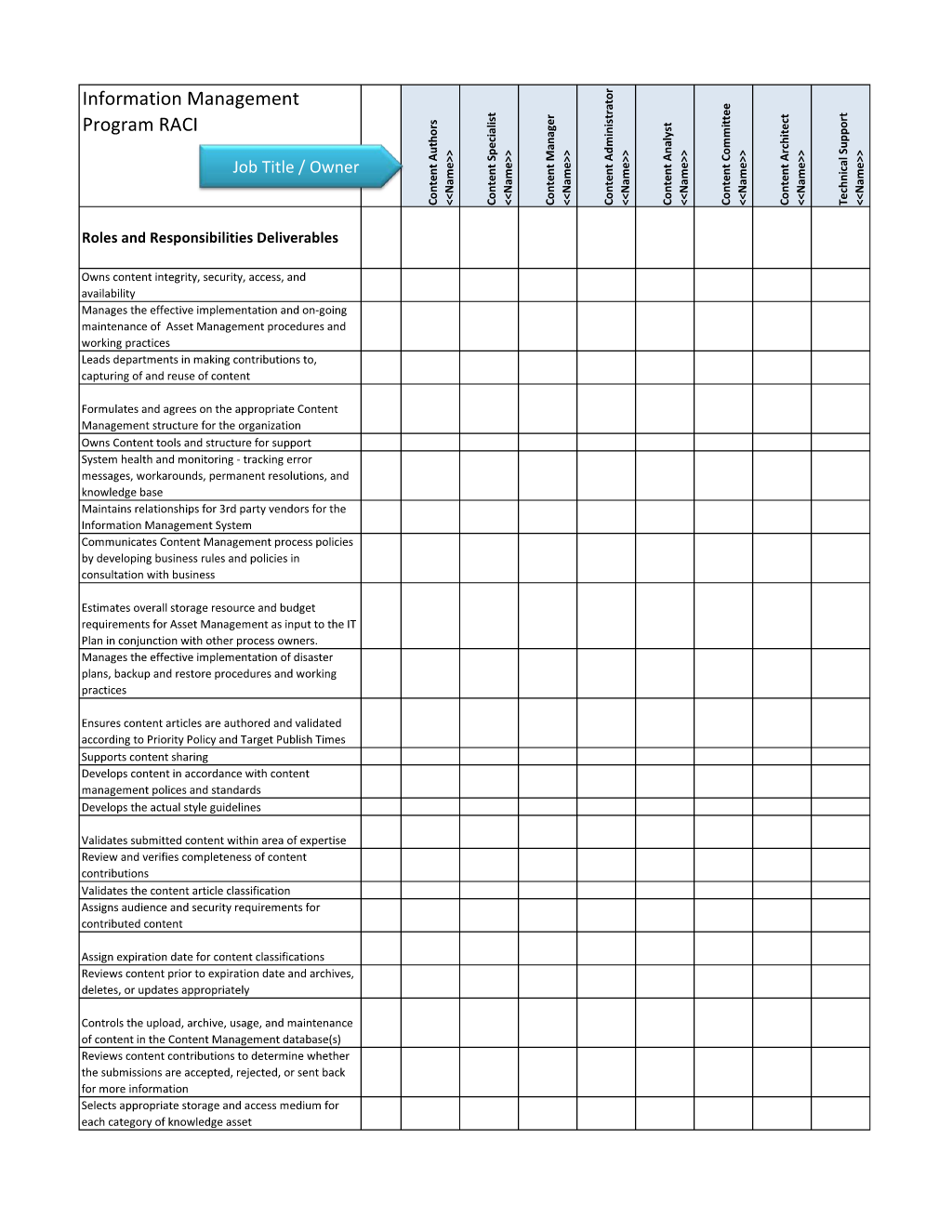
Cart%20matrix%20to%20help%20agree%20upon%20responsibilities%20and%20communication%20for%20the%20Information%20Management%20Program.%20Hundreds%20of%20project%20management%20documents%20available%20from%20ProposalKit.com. "Pin this RACI Matrix Worksheet")
RACI Matrix Worksheet
 Get 20% off ordering today: Click here for the code
Proposal Kit Professional adds business proposals, all six Contract Packs,
Project Management Pack library, and Expert Edition software.
We include this editable document in the Proposal Kit Professional. Order and download it for $199. Follow these steps to get started.
 DOWNLOADABLE, ONE-TIME COST, NO SUBSCRIPTION FEES
Key Takeaways
- One-time License, No Subscriptions: Pay once and use Proposal Kit forever-no monthly fees or per-use charges.
- Built for Business Projects: Start with a proven RACI Matrix Worksheet and tailor sections, fields, and branding for your day-to-day project work.
- Instant Access: Download immediately and open the document right away-no waiting, no onboarding delay.
- Project-Ready Structure: Use a ready, professional layout for real-world project tasks (checklists, forms, analysis pages) so teams can execute consistently.
- Fully Editable in Word: Edit everything in Microsoft Word-swap text, add/remove sections, and apply your logo/colors without special skills.
- Step-by-Step Wizard Help: The Proposal Pack Wizard guides you with training/help and keeps you moving-no getting stuck on formatting or assembly steps.
- Wizard Data Merge & Project Management: Let the Wizard manage projects and merge recurring data (company/client names, addresses, dates) across your project documents.
- Included in Proposal Kit Professional: Available exclusively in the Proposal Kit Professional bundle.
 What Our Clients Say
The folks at Proposal Pack have over 20 years producing quality documents and facilitating their use in a most efficient manner. Whether needing to prepare one proposal or a continuing stream, Proposal Kit pricing is so nominal, one can hardly afford not to use the product."
1. Get Proposal Kit Professional that includes this business document.
We include this RACI Matrix Worksheet in an editable format that you can customize for your needs.
2. Download and install after ordering.
Once you have ordered and downloaded your Proposal Kit Professional, you will have all the content you need to get started with your project management.
3. Customize the project template with your information.
You can customize the project document as much as you need. You can also use the included Wizard software to automate name/address data merging.
Use cases for this document
Evergreen Care Alliance streamlines content governance across clinics
The Challenge
As Evergreen Care Alliance expanded to seven clinics, content lived in silos, and no one agreed on who was responsible, accountable, consulted, or informed for knowledge articles, code deployments, and backups; the project manager struggled to keep stakeholders in the loop as incidents and upgrades piled up.
The Solution
The team built a RACI chart to define roles for Content Authors, a change owner, a technical representative, and the project board, using an Excel worksheet to assign R/A/C/I and clarify decision authority; Proposal Kit supported the effort by generating companion documents-an executive overview, training plan, and communications schedule-without using AI Writer to write the matrix itself.
The Implementation
They used an Excel RACI template with drop-down list selections and conditional formatting to highlight a single accountable per task, then assembled a stakeholder briefing and onboarding materials with Proposal Kit's document creation tools; AI Writer drafted the training guide and status report, RFP Analyzer mapped vendor requirements for a content platform, and line-item quoting produced a budget annex for storage and monitoring.
The Outcome
With clear task ownership and consulted and informed roles, incidents dropped, disaster plans were exercised on schedule, sponsors kept informed, and the project stayed on track while leadership approved the funding package created with Proposal Kit's supporting documents.
BlueFin Logistics aligns cross-supplier knowledge and Agile delivery
The Challenge
BlueFin's rapid growth brought large complex projects with multiple suppliers and sprint tasks, but unclear RACI roles caused rework and missed handoffs between developers, subject matter experts, and customer service.
The Solution
A raci matrix example became the team's compass: responsible developers, a single accountable product owner, consulted SMEs, and informed client reps, while Proposal Kit produced the accompanying agile release plan, stakeholder engagement brief, and a case study without using AI Writer on the core project management template.
The Implementation
They organized project phases to initiate execution, populated a matrix template with assigned roles per story, and linked to TeamGantt for milestones; Proposal Kit's AI Writer created a customer-facing progress report and a lessons-learned summary, RFP Analyzer parsed a retailer's integration RFP, and line-item quoting supported a change budget for API enhancements.
The Outcome
The clarified roles and responsibilities kept teams in sync, cycle time improved, the customer stayed informed through regular reports, and BlueFin won the retailer contract using Proposal Kit-backed proposals that reinforced the governance model.
Canyon River Energy modernizes information management for a utility
The Challenge
Canyon River Energy faced audit findings on content integrity and access, and the project sponsors demanded project stakeholders' clarity before approving a new system amid frequent change requests.
The Solution
The PMO introduced a responsibility assignment matrix, responsible, accountable, consulted, informed, covering taxonomy design, backups, code deployments, and vendor updates, and used Proposal Kit to produce the governance charter, risk analysis, and training schedule as supporting documents rather than generating the matrix with AI.
The Implementation
An Excel download of a RACI chart template seeded the Excel workbook; the team listed project deliverables, added a project phases list, and used color rules to expose gaps; Proposal Kit's AI Writer drafted a risk study and stakeholder FAQ, RFP Analyzer compared bids from two platform vendors, and line-item quoting detailed licensing and migration costs for approval.
The Outcome
By clarifying team roles and assigning RACI values, the utility reduced delays, the project board approved the budget based on the supporting documents, and operations reported smoother releases, with everyone kept in the loop.
Abstract
This Information Management program document defines clear roles and responsibilities for building and operating an enterprise content management capability. It reads like a responsibility assignment matrix using the RACI model to clarify who is responsible, accountable, consulted, and informed for key deliverables. The scope spans content integrity and security, system health monitoring, backup and restore, disaster planning, vendor relationships, taxonomy and categorization design, content validation and expiration, capacity planning, code deployments, and budget and priority setting.
The accountable role sits with leadership that provides planning and budget, and sets program vision. Content Managers and owners supervise content tools, policies, and compliance, while Content Authors carry the responsible role for authoring, style guidelines, classification, and audience and security settings. Content Specialists and Analysts validate submissions, conduct audits, and coordinate documentation.
IT, architects, and developers perform technical design, maintenance, upgrades, hot fixes, and performance tuning, and they ensure integration, migration, and operational support. External service providers contribute when new applications or releases require updates. Subject matter experts are consulted to validate accuracy, and stakeholders are kept informed through status updates and process communications. This structure increases accountability, clarifies decision rights, and keeps teams in sync across project phases.
Organizations can operationalize this with an RACI template in Microsoft Excel or Google Sheets. Build a matrix table listing project phases and tasks on rows and team members on columns, then assign R, A, C, I per task using an Excel data validation list and color-code assignments with conditional formatting. Add due dates, a status field, and a work breakdown by phase; link to a Gantt chart or activity schedule to view RACI assignments alongside milestones.
Advantages of RACI include project clarity, improved communication, and better coordination; disadvantages can be time-consuming setup, perceived overly restrictive rules, or lack of buy-in, so train during onboarding, use a single accountable per task, and document do's and don'ts. RACI alternatives such as RASCI (supportive role), DACI, RAPID, or the CARS model may fit different decision-making needs.
Use cases include IT service management knowledge bases (ITIL RACI for incident management and change management with a CAB change advisory board), cross-supplier content integrations, and agile planning where sprint tasks assign R, A, C, and I for taxonomy updates or code deployments.
Proposal Kit can help teams assemble documents like this with templates for Microsoft Word, automated line-item quoting in proposals, and an AI Writer to produce companion materials. Its extensive template library and document assembly tools make it easier to define project roles, list tasks and deliverables, and keep everyone informed without complexity.
Expanding on the program, a practical way to operationalize these responsibilities is to implement a responsibility assignment matrix where RACI stands for responsible, accountable, consulted, and informed. RACI definitions help define roles and clarify decision rights and decision authority so project stakeholders, the project board, project sponsors, the project manager, change owner, technical representative, and customer all know who is the decision maker and who must be kept informed. Phase by phase, this improves project accountability, stakeholder engagement, and task ownership and helps keep teams in sync and keep the project on track.
Many teams build a RACI chart in an Excel worksheet or Google Sheets RACI. A simple RACI matrix template or RACI chart template can include template headers such as project title, project manager name, project stakeholders, project phases list, project deliverables, project milestones, and a list of team members and roles. Using an Excel RACI template or RACI matrix template, assign roles and assign responsibilities by selecting R, A, C, or I from a drop-down list fed by an Excel data range, and apply an Excel conditional formatting rule to color-code assignments.
An Excel workbook or Google Sheets download can include a sample RACI chart with a template with example data, status fields, and links to a Gantt view using TeamGantt. You can project phases organized from initiate to execute and tie RACI to project phase activities and the approval process. This is also compatible with agile framework work: an agile RACI, agile RACI matrix, or agile planning RACI clarifies the consulted role and informed role on sprint decisions.
Consider RACI alternatives such as a RACI matrix (adding a supportive role), or RACI vs RASCi vs DACI matrix, and the RAPID framework (driver, approver, contributor, informed; recommend, agree, perform, input, decide; communicate approver, responsible, support). RACI origins are in clarifying roles to avoid confusion; a raci faq can address disadvantages of RACI, like setup time or lack of buy-in, which training and onboarding can mitigate. In IT, apply an ITIL RACI with Gantt for service management RACI, incident management RACI, or RACI for ITIL change management across suppliers using a cross-supplier template. Assign R A C I per task, assign RACI values to consulted and informed roles, and keep everyone in the loop with status updates.
Proposal Kit supports this effort by assembling project governance narratives, a worksheet for roles and definitions, and RACI roles and responsibilities template content using its extensive template library. Its AI Writer can write supporting materials, while automated line-item quoting aligns budgets to deliverables. Teams can pair these documents with their own templates for Microsoft Excel or templates for Google Sheets to build an Excel RACI chart, RACI roles template, RACI model template, and matrix template that integrate smoothly with the overall project plan.
Further strengthening the program, organizations should emphasize project stakeholders' clarity in large complex projects by using an RA (responsible accountable) check before adding consulted and informed. This simple step clarifies responsibilities, helps clarify roles and team roles, and ensures every activity has a single decision owner while others keep informed. When subject matter expertise is required, the consulted role captures that input without diluting authority, which improves RACI responsibility assignment discipline and keeps the project team aligned.
A practical RACI example drawn from this program's workflow can serve as a RACI matrix example: to validate content and classify, the Content Author is responsible, the Content Manager is accountable, Subject Matter Experts are consulted, and IT operations are informed. For code deployment to production, the technical representative is responsible, the change owner is accountable, Content Analysts are consulted, and project sponsors are informed. These assignments make those who are responsible accountable, consulted, informed, and explicit, reduce rework, and keep the project on track.
Implementation can be lightweight. Provide an Excel download or Google Sheets file with template components that include a project phases initiate, execute, view, task list, owners, and R/A/C/I fields. Assigning RACI roles via a drop-down and color rules lets teams see gaps fast.
Add a section to keep stakeholders in the loop and a log of changes per phase. Pair this with a short guide on how to assign roles and assign responsibilities, plus a checklist that maps decision points to a decision maker. Over time, this approach scales to large complex projects while maintaining project stakeholders' clarity and momentum.
Writing the RACI Matrix Worksheet document
business,project,records,management,toolkit,information,documents,templates,boilerplate,form,outline,textThe editable RACI Matrix Worksheet document - complete with the actual formatting and layout is available in the retail Proposal Kit Professional.
20% Off Discount
 4.7 stars, based on 850 reviews
Related Documents
- Records Inventory Worksheet Questionnaire for Business Units
- Records Management Pre-Inventory Survey
- Records Survey and Inventory Analysis
- Business Case for Records Management
- Records Management Program Analysis Document
- Records Management Policies and Procedures
- Physical Content Management Box Label
- Records Access Security Plan
- Records Access Security Plan (Expanded)
- Records Management Metadata Model
- Records Management Governance Plan
- Records Management Topic Template
- Records Management Taxonomy Topic Template
- Records Management File Plan Template
- Records Management Expanded File Plan Template
- Application for Records Retention Form
- Authorization for Records Destruction Form
- Formal Record Hold Investigation Form
- Formal Record Hold Notice Form
- Release of Legal Hold Notice Form
- Record Retention Schedule Change Form
- Legal Hold and Discovery Log
- Records Disposition Log
- Stakeholder Concerns Log
- Records Inventory Worksheet
- Records Management Return On Investment Calculator
- Communication Plan
- User Acceptance Testing (UAT) Schedule
- User Acceptance Testing (UAT) Enhancements and Bug Tracker
- Risk Mitigation Plan
 Published by Proposal Kit, Inc.
We include a library of documents you can use based on your needs. All projects are different and have different needs and goals. Pick the documents from our collection, such as the RACI Matrix Worksheet, and use them as needed for your project.
 Facebook
 YouTube
 Bluesky
 Search Site
© 1997 - 2026, Proposal Kit, Inc. All rights reserved. Privacy Policy